
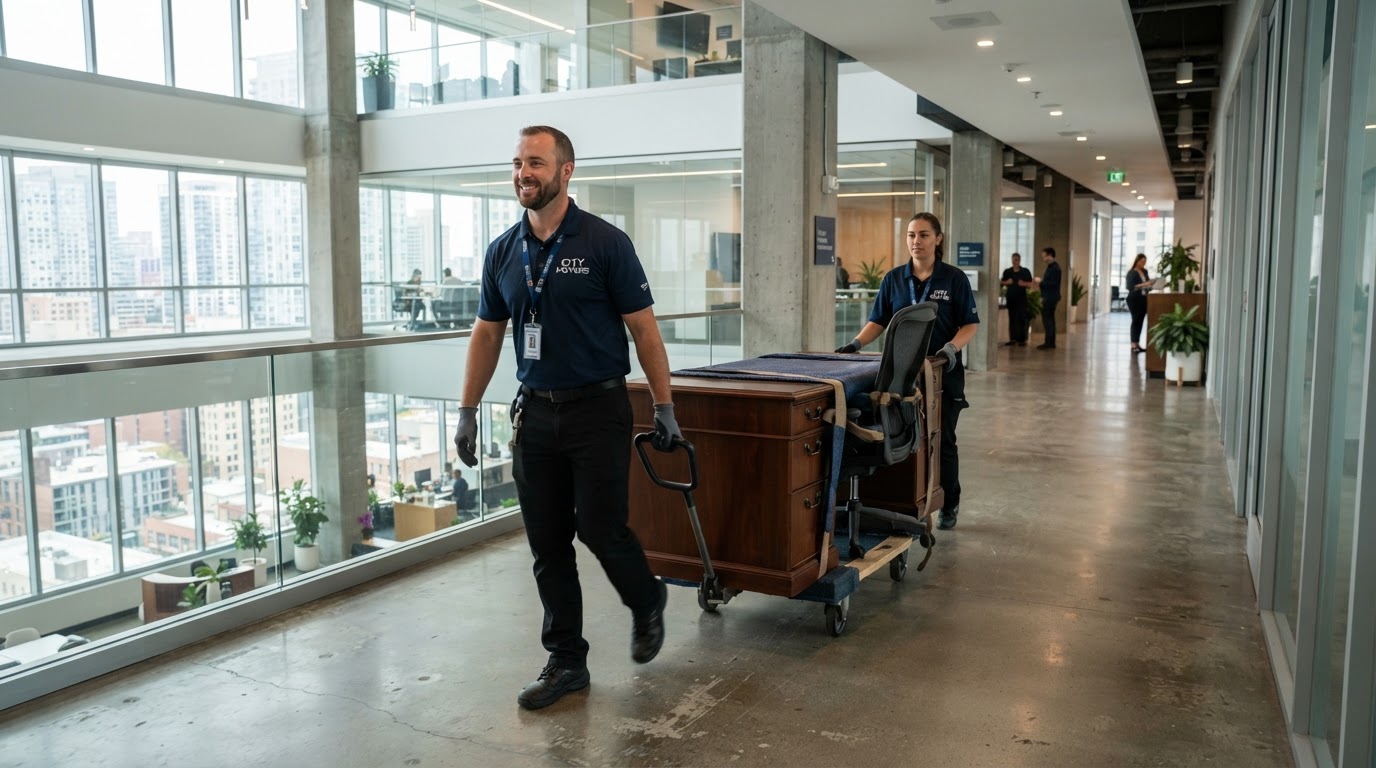

When a company outgrows its current space or a lease expires, office furniture moving becomes the centerpiece of the entire relocation project. Unlike a residential move, relocating desks, workstations, conference tables, and modular systems requires coordination across facilities, IT, human resources, and the moving vendor — and every hour of delay translates into lost productivity and revenue.
This guide breaks down what facility managers and office administrators need to know to run a successful office furniture moving project from start to finish, including scoping the inventory, selecting a qualified mover, protecting the building, and stabilizing the new space on day one.
Why Office Furniture Moving Is Different from Residential Moving
Residential movers handle boxed household goods and standard furniture. Office furniture, by contrast, includes modular cubicle systems with integrated power raceways, height-adjustable desks with electric motors, and conference tables that may weigh several hundred pounds. An office furniture moving crew must understand how to disconnect and reconnect low-voltage wiring, bag and label hardware so each workstation reassembles correctly, and transport electronics in anti-static packaging. A general labor crew without this training will damage panels, lose hardware, and leave the new floor non-functional on Monday morning.
Step 1: Build a Complete Furniture Inventory
Before requesting a single bid, walk every floor and catalog every item that will move. Record the workstation count, the number of conference tables, executive suites, filing systems, and specialty items such as safes or server racks. Tag each asset with its destination floor and room number on the new floor plan. An accurate inventory is the basis for every bid you receive — a mover cannot price a move they have not measured.
Step 2: Solicit Three Comparable Bids
Invite at least three commercial movers with documented office-move experience to walk the space and bid on the project. Compare not just the bottom-line price but the crew size, truck count, after-hours rates, and what is excluded from each bid. A bid that is 20 percent below the median is usually missing a scope item — typically stair-carries, overtime multipliers, or building protection. Verify DOT operating authority for interstate moves and request a Certificate of Insurance naming both your company and the building owner as additional insureds.
Step 3: Protect the Building on Both Ends
Both the origin and destination landlords will require building protection. Install masonite on elevator floors, corner guards on doorframes, and elevator pads in every freight cab you will use. Reserve the freight elevator for your move window and confirm loading-dock availability. A damaged elevator cab or scratched doorframe can cost more in landlord restoration charges than the entire move.
Step 4: Execute the Move After Hours
The best commercial movers execute the transition between Friday evening and Sunday midnight, giving IT the full weekend to reconnect and test before employees arrive Monday at 8:00 AM. Move departments in priority order: IT infrastructure first, then critical workstations, then non-critical furniture and archives. Maintain a live war room with the mover's project captain, the IT lead, and the facilities lead present for the entire move.
Step 5: Stabilize the New Space
The first 48 hours determine employee sentiment. Keep a helpdesk concierge crew on-site through Monday to immediately resolve misplaced monitors, missing phones, and ergonomic adjustments. Survey employees at 24 hours and 7 days, and close the project with a formal lessons-learned debrief that feeds into the next relocation plan.
A well-executed furniture relocation is invisible to customers and barely noticed by employees. The difference is almost always in the planning — treating the project as the facility team's largest single undertaking of the year rather than a routine logistics task.
Find Commercial Office Relocation & Moving Providers
Turnkey office moves, headquarters relocation, and multi-floor corporate moves with minimum downtime.