
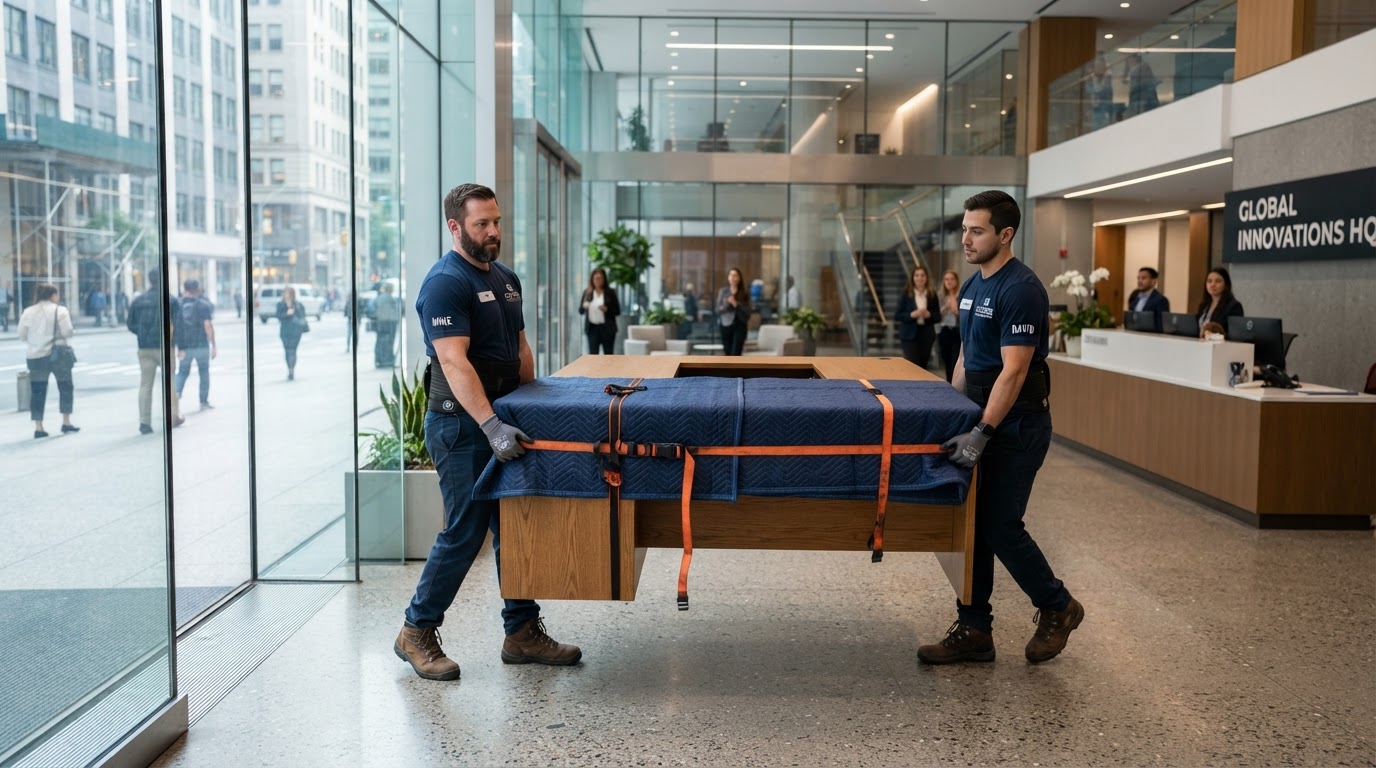

Selecting the right office furniture movers is the single most important decision a facility manager makes in a relocation project. The wrong crew damages modular panels, loses hardware, leaves IT disconnected, and turns a weekend move into a week of downtime. The right crew completes the move invisibly and has employees productive at their new desks by Monday morning.
This guide covers the credentials, insurance, and operational details you should verify before signing a contract with any office furniture movers on your shortlist.
Verify Commercial Moving Experience
Ask each candidate how many office moves of comparable size they complete per year. Office furniture movers who specialize in corporate relocations understand the rhythm of a weekend move, the importance of hardware bagging, and the coordination required between furniture and IT crews. A residential mover who occasionally takes an office job will not have the crew training, equipment, or project management to execute a multi-floor corporate move.
Check Certifications and Training
The International Office Moving Institute (IOMI) certifies movers in office-move-specific skills including project planning, furniture disassembly, IT disconnect and reconnect, and decommissioning. Ask for the certification number and verify it. While IOMI certification is not a guarantee, a mover without it is a yellow flag that warrants additional scrutiny of their training and experience.
Confirm DOT Operating Authority
For interstate moves in the United States, verify the mover's USDOT and MC numbers through the FMCSA SAFER system. For Canadian moves, confirm the carrier's provincial authority and National Safety Code profile. Operating authority confirms the carrier is registered for the type of transportation your move requires — it does not by itself confirm quality, but its absence is a disqualifier for a regulated move.
Review Insurance and COI Requirements
Request a Certificate of Insurance that names your company and both landlords as additional insureds. Require at minimum: general liability of $1M to $5M per occurrence depending on building class, cargo coverage at full replacement value of the furniture being moved, workers' compensation statutory for the jurisdiction, and auto liability of $1M minimum for the trucks in the move. Insist on full-value protection rather than the federal released-value minimum, which reimburses damaged goods at roughly $0.60 per pound.
Walk the Space Before Bidding
A mover who will not walk the space before bidding is a mover who will bill for assumptions. Every qualified commercial mover expects a pre-bid walk-through to measure elevators, count workstations, assess loading-dock access, and identify specialty items. If a mover bids without seeing the space, their estimate is a guess — and you will pay for every guess they got wrong.
Ask for Commercial References
Request at least three commercial references from moves of comparable size and call them. Ask the references whether the move finished on schedule, whether the crew damaged panels or lost hardware, and whether the IT reconnect was clean on Monday morning. Twenty minutes on the phone is the cheapest due diligence in the entire project.
Watch for Red Flags
A bid more than 20 percent below the median of three quotes is usually missing a scope item. A mover who quotes an hourly rate without explaining overtime triggers is a mover who will bill time-and-a-half after midnight. A mover who will not provide a sample contract before signing is a mover whose terms you have not reviewed.
Choosing the right crew is risk management, not procurement. A mover without the right credentials is a vendor whose first mistake will be your problem to pay for — and in a commercial move, that first mistake can shut down an entire floor.
Find Commercial Office Relocation & Moving Providers
Turnkey office moves, headquarters relocation, and multi-floor corporate moves with minimum downtime.