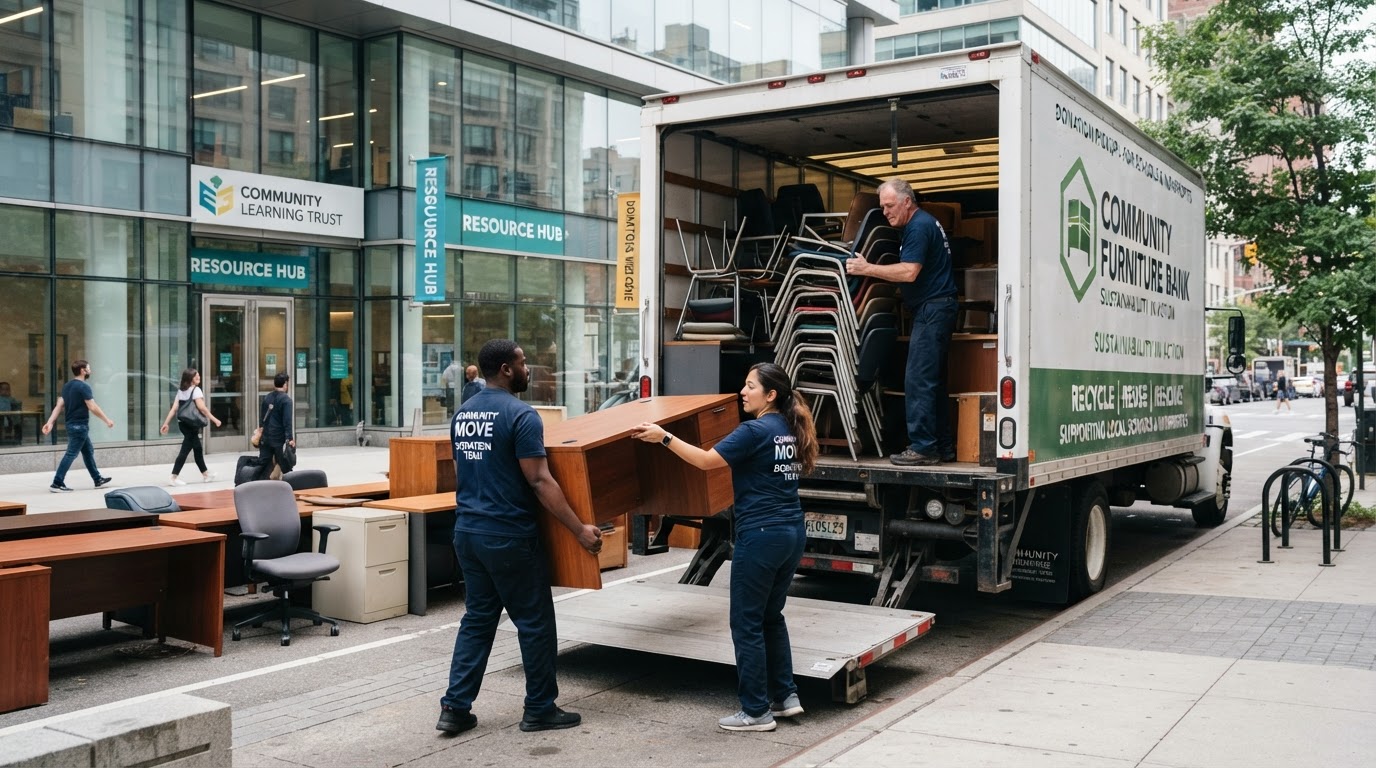

Sending commercial furniture to municipal landfills is costly and contrary to corporate ESG targets. A zero-landfill decommissioning redirects usable furniture to schools, nonprofits, and community organizations — and in the process, cuts disposal fees, generates tax deductions, and produces a measurable sustainability story for the annual report.
The Zero-Landfill Hierarchy
- Reuse: redeploy furniture internally to other floors or the furniture vault.
- Resale: auction or dealer buy-back for premium systems furniture.
- Donation: redirect usable pieces to schools, nonprofits, and community partners.
- Recycling: grind and recycle metals, plastics, and wood rather than landfilling.
- Landfill: the last resort, and ideally zero.
Donation Partnerships
Many decommissioning specialists maintain standing relationships with local schools, Habitat ReStores, and community organizations. The mover arranges pickup, the receiving organization provides a donation receipt, and the corporate tenant records the fair-market value as a tax-deductible contribution. The receipt is often worth more than the disposal fee would have been.
Documenting the Diversion
Ask the decommissioning vendor for a diversion report: tonnage diverted from landfill, tonnage donated, and tonnage recycled. The report feeds directly into ESG and Scope 3 disclosures, and a good vendor will format it for the annual sustainability narrative.
Cost and Tax Considerations
Donation often costs less than landfilling once the tax benefit and the avoided disposal fees are netted. For premium furniture, resale can even produce net revenue. The right vendor will model all three paths — reuse, donation, and recycling — and recommend the highest-value, lowest-waste mix for each asset.
Zero-landfill decommissioning is not a feel-good gesture; it is a procurement and ESG strategy that pays for itself. The companies that do it well treat the end-of-lease furniture pile as an asset, not a waste stream.
Find Office Decommissioning & Furniture Liquidation Providers
Lease-end broom-clean sweeps, surplus furniture purchasing, recycling, and responsible zero-landfill disposal.