
Many organizations are rightsizing their leases and transitioning to flexible hot-desking. The shift from a 1:1 desk-to-employee ratio to a hoteling model is not just a furniture project — it is a change-management project that touches every employee's daily routine.
From 1:1 Desks to Hoteling
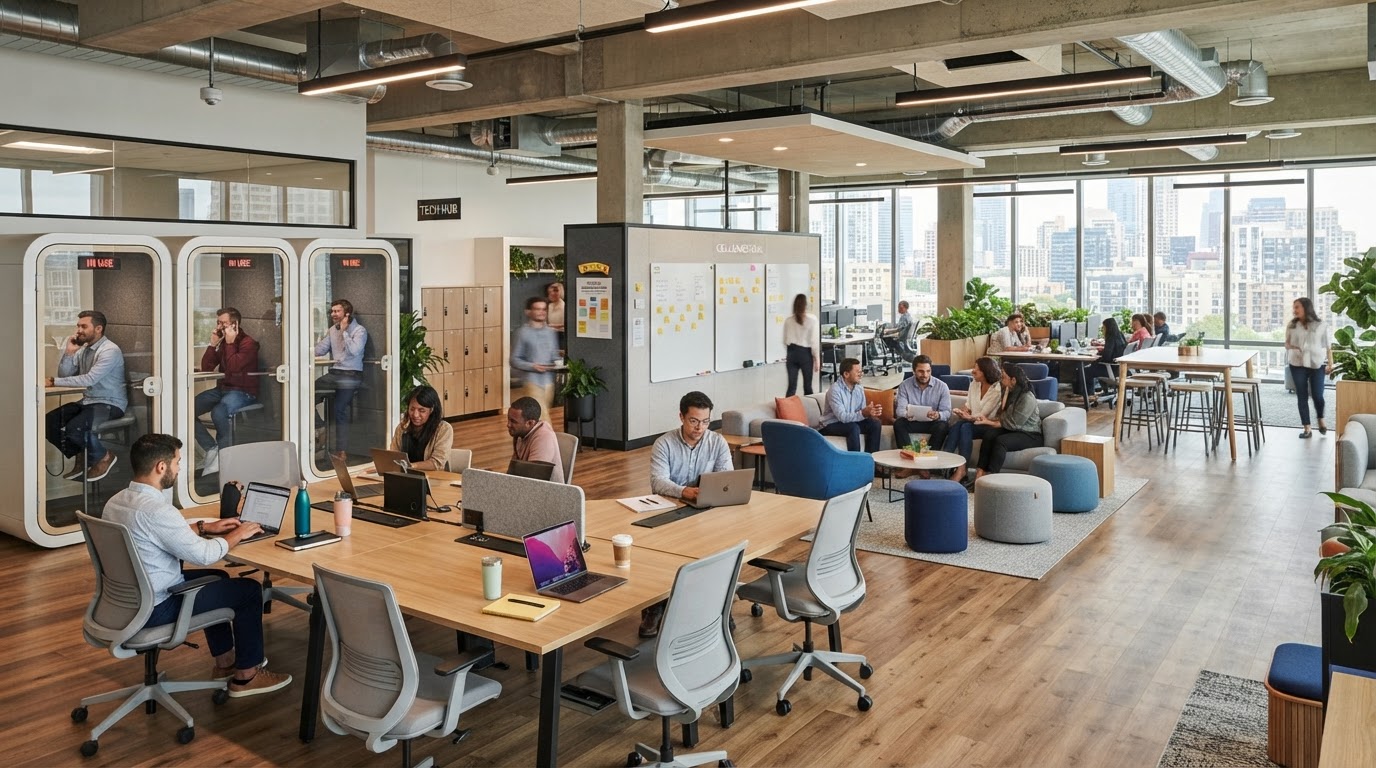
In a hoteling model, desks are shared and reserved through a booking system. The average office can support the same headcount in 30–40% less square footage, because a hybrid workforce is rarely all in on the same day. The freed space becomes collaboration zones, phone booths, and lounge areas.
Reservation Systems and Technology
A desk-booking platform lets employees reserve a desk before arriving, see who else is in, and check in at the desk. The booking system is the spine of the hoteling program — without it, the model devolves into first-come, first-served, which is exactly the chaos employees resent.
Zoning the Agile Floor
- Quiet zones: focused individual work, no calls.
- Collaboration zones: open desks for team work.
- Phone booths: enclosed, for private calls.
- Lounge zones: informal meeting and breaks.
Change Management
Employees resist hot-desking when it is imposed rather than designed with them. Pilot the layout with a single team, gather feedback, and iterate before a floor-wide rollout. The companies that succeed with hot-desking are the ones that treat the floor plan as a product, not a mandate.
Hot-desking is not a furniture purchase — it is a workplace strategy. The furniture is the easy part; the adoption is the project.
Find Internal Office Moves & Floor Restructuring Providers
Inter-departmental shuffle, churn moves, floor plan reconfigurations, and hybrid workspace rebalancing.